Classroom · Lesson 01 · Geography × Art × Social Studies
Good Flag, Bad Flag: a design lab with pixels
Students play a pixelated flag quiz, discover as a class which flags survive the blur and which don't, test the five classic flag design principles against real data, then design a flag of their own and run it through the same test.
Everything you need
Four PDFs and one link. Print what you need, skip what you don't.
All materials are free to copy, print and adapt for teaching. Attribution appreciated: “CountryClue Classroom, countryclue.online”. Written by Tim White, CountryClue — questions and classroom reports to tim@countryclue.online.
The hook: the one-inch test, digitised
Vexillologist Ted Kaye, whose short guide Good Flag, Bad Flag is the basis of Roman Mars's much-watched TED talk on flag design, offers a simple check: a flag should still be recognisable when drawn about one inch by one and a half inches — roughly how it looks on a flagpole thirty metres away.
A pixelated flag is the same test in digital form. Strip a flag down to 13 columns of colour and the well-designed ones still announce themselves; the ones with seals, lettering or near-identical cousins fall apart. That gives the lesson something most design lessons lack: a number. How many guesses did the class need? That is the flag's score.

Drag to sharpen. The game reveals one level per wrong guess — so the level at which the class recognises a flag is its score.
The five principles (in plain words)
These come from the North American Vexillological Association's guide. Students will rediscover most of them from the data before they ever see the list — which is the point.
Lesson flow
Ten rounds, same flags for everyone
Open the classroom link on student devices (or project the printable). Each student records, for every round: the country, the guess number on which they got it, and which clue helped. Keep the ten flags secret — they are ordered so that easy and hard ones alternate.
Build the class table, then watch the talk
Collect the class average guess number per flag on the board. Ask: why did Japan, Canada and Switzerland fall on the first or second guess while Chad, Romania and Indonesia needed the clues? Let students propose rules. Then show Roman Mars's TED talk (or its first eight minutes) and compare the class's rules with Kaye's five principles. Expect them to match on three or four.
Design a flag and pixel-test it
Each student designs a flag for the school, the class or their town following the five principles. First draft in the worksheet's one-inch box, then large. They write three sentences on what the colours and shapes mean. Finally, flags are shown from the back of the room (or photographed and shrunk on the projector) and the class votes on which are recognisable. Most recognisable flag wins — which is the same thing as "best designed".
The ten flags — and why these ten
The default sequence mixes flags that pass the pixel test with flags that fail it for different reasons, so every principle shows up in the data.
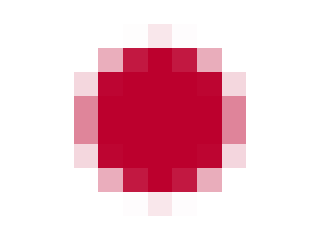 | Japan Simple One shape, two colours. Almost everyone gets it on guess 1 — the benchmark for the whole lesson. |
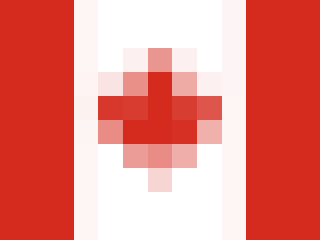 | Canada Distinctive The leaf dissolves into a red blob, but the red–white–red proportions are unique enough to carry it. |
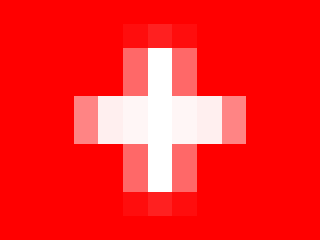 | Switzerland Simple Survives any resolution. Good moment to ask: is it a plus sign or a cross, and does that matter? |
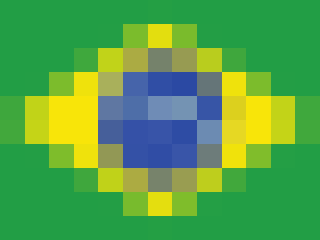 | Brazil Lettering Distinctive Breaks principle 4 (a motto on the globe) yet stays recognisable because the green–yellow–blue combination is unique. Shows that principles trade off. |
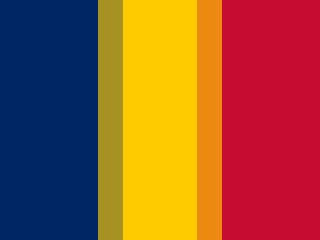 | Chad Twin Indistinguishable from Romania except for the shade of blue. Chad raised the matter at the UN in 2004. The class will need the continent clue. |
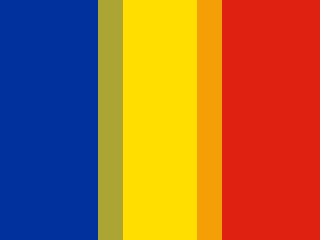 | Romania Twin Placed a few rounds after Chad so students feel the problem from the other side. |
 | Indonesia Twin Same as Monaco (different proportions) and Poland upside down. Two colours and one division is too little information. |
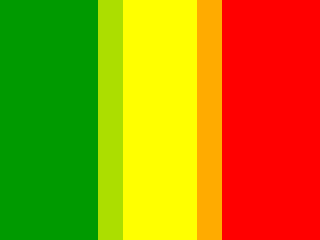 | Mali Twin Related Guinea is the mirror image; Senegal adds a star. Opens the Pan-African colours discussion — similarity here is a deliberate statement of kinship. |
 | Turkmenistan Complex A carpet-pattern stripe with five guls. The most detailed national flag in the world, and at 13 columns it reads as "green with a smudge". |
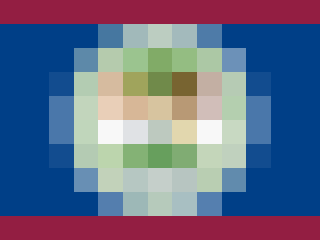 | Belize Seal A coat of arms with two men, a tree, a ship and a motto. Students will see a white circle on blue and nothing else — the perfect "seal on a bedsheet" case. |
Look-alikes gallery
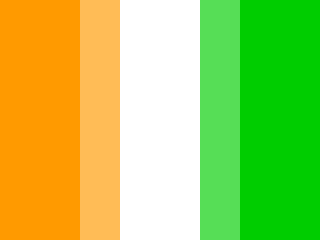
Put these on the projector during Part 2. Each pair is shown at the game's hardest level.
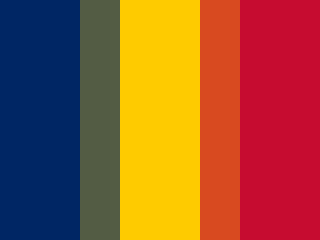
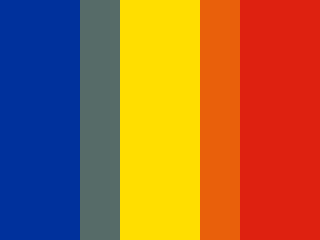
Same tricolour, one shade apart. Accidental twins.



Ratio and orientation are the only differences — neither survives a flagpole.
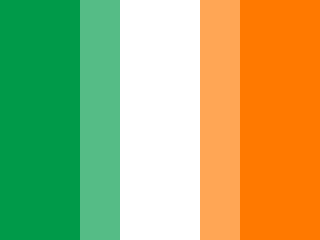
Mirror images. Ask which way the wind would need to blow.
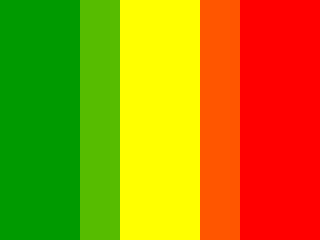
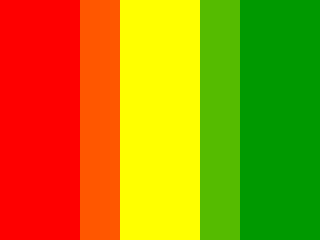
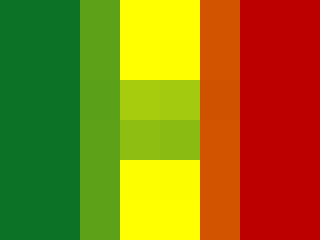
Pan-African colours: related on purpose. Principle 5, second half.
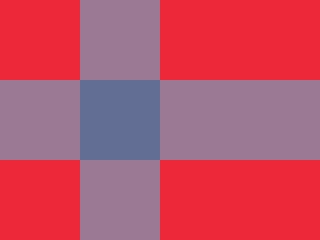
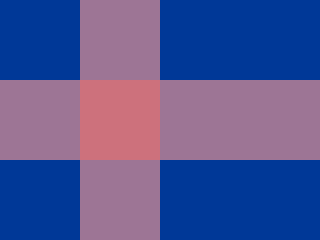
Nordic cross family: the colours swap, the kinship stays.
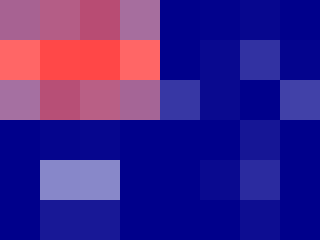

Colonial inheritance: both a Union Jack and a Southern Cross. New Zealand held two referendums about it.
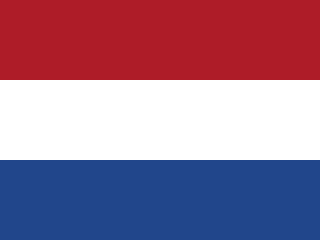
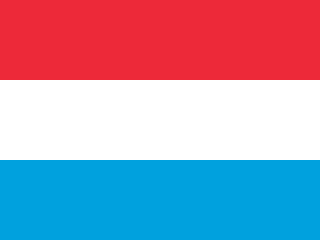
Luxembourg's blue is lighter and the flag is longer. That's all.


Liberia was founded by freed American slaves; the flag says so.
Your classroom link
A classroom link fixes the sequence of flags, so every student sees the same ten in the same order and the class table in Part 2 actually adds up. No login, nothing to install — students open the link and play.
Choose your own flags (196 countries)
Tip: keep it to 8–12 rounds, alternate easy and hard, and include at least one pair of twins.
What students see at the end
After the last flag the game shows a summary and a Copy results for teacher button. The pasted text looks like this — one line per round, guess number out of six, and the colour grid (🟩 correct, 🟨 right continent, ⬛ wrong):
CountryClue Classroom 8/10
1. 1/6 🟩
2. 2/6 ⬛🟩
3. 1/6 🟩
4. 3/6 ⬛🟨🟩
5. 5/6 🟨🟨⬛🟨🟩
6. 4/6 ⬛⬛🟨🟩
7. X/6 🟨⬛⬛⬛🟨⬛
8. 3/6 🟨🟨🟩
9. 6/6 ⬛⬛🟨🟨🟨🟩
10. X/6 ⬛🟨⬛⬛⬛⬛
Students paste this into a shared doc, a form or the chat; you have the whole class's data in two minutes.
Assessment
The rubric scores four things. Only one of them is "is it pretty".
| Criterion | 4 · Excellent | 2 · Developing |
|---|---|---|
| Follows the five principles | All five met; any exception is deliberate and explained. | Two or three met; busy, or too many colours. |
| Symbolism (written) | Every colour and shape has a stated meaning tied to the place or group. | Some elements explained; others chosen "because it looks nice". |
| Pixel test (peer vote) | Recognised by most of the class at the one-inch size. | Recognised by a few; confused with another design. |
| Craft | Clean edges, consistent colours, fills the format. | Uneven, unfinished or off-format. |
Full four-level rubric with point values is in the PDF.
Standards alignment
- United States
- National Core Arts Standards, Visual Arts: VA:Cr1.1, VA:Cr2.1, VA:Re7.1 (generating ideas, refining design, perceiving visual messages). NCSS C3 Framework: D2.Geo.4 (cultural characteristics of places), D2.Civ.14 (how ideas and symbols represent groups).
- England
- KS3 Art & Design: produce creative work, evaluate and analyse, know about great designers. KS3 Geography: locational knowledge and human geography of place and identity.
- International / IB MYP
- Design Criterion A–D (inquiring, developing ideas, creating, evaluating); Individuals & Societies key concept "identity and relationships".
Extensions and variations
- Redesign a bad flag. Give groups a "seal on a bedsheet" (many US state and city flags qualify) and have them fix it. Mars's talk covers Milwaukee and Pocatello; either is a good starting point.
- History through colour. Pan-African, Pan-Arab, Pan-Slavic colours, the Nordic cross, Union Jack cantons, Liberia and the United States, Hawaii's Union Jack. Each family is one decolonisation or migration story.
- Statistics. Older students compute the mean and spread of guess numbers per flag, then plot guess number against number of colours or presence of a symbol. Turkmenistan and Belize are reliable outliers.
- Languages. CountryClue accepts answers in 15 languages. A Spanish, French or German teacher can run the same ten rounds with students answering in the target language.
- Computer science. Why does 13 columns keep Japan but destroy Belize? Discuss resolution, information and what a "pixel" throws away.
Resources
- Roman Mars — Why city flags may be the worst-designed thing you've never noticed (TED, 2015, 18 min). The five principles are covered in the first eight minutes.
- Ted Kaye — Good Flag, Bad Flag (NAVA). Free 16-page PDF, the original source of the principles, available in several languages.
- Portland Flag Association — Good Flag, Bad Flag page. Translations of the booklet and extra flag-design worksheets.
- Flags of the World. History and symbolism of any individual flag, for the Part 3 write-up.
Questions teachers ask
Do students need an account?
No. There are no accounts, no ads and no sign-up on CountryClue. Students open the link in any browser on a laptop, tablet or phone.
We don't have devices. Can we still run it?
Yes. Use the printable pixel flags PDF on a projector or on paper: the same ten flags at three levels of pixelation, with an answer key. Students guess round by round as you reveal levels.
Can I use different flags?
Yes — build your own sequence above. Any of the 196 countries in the game can be included, in any order.
Can I use the game for other lessons?
Of course. The classroom link works for any sequence: a "countries of South America" warm-up, a Nordic cross family, a set of flags from a novel the class is reading. Daily Flag mode (one flag a day, same for everyone) is a good five-minute bell-ringer.
Where do the flag images and facts come from?
Flag images are the official designs rendered from open data; capital, population, area and neighbour clues are from public sources and are kept deliberately rounded.
Try the ten flags yourself first
Three minutes. You'll see exactly what your students will see. Ran it with a class? Tell me what happened: tim@countryclue.online — Tim White, CountryClue.
Open the classroom link →